Why Most Work Gloves Fail | Protection Standards Explained by a Navy SEAL

Rethinking Gloves
I never paid much attention to gloves. Like most people, I saw them as five-fingered slip-on coverings we use for labor, sports, or cold weather. Over the years, I’ve worn countless types of gloves while playing traditional sports, serving in the military, racing, and participating in action sports. But it wasn’t until I became part of a protective textile company that I truly started paying attention.
During COVID, I went back to school and earned a Master’s degree and my MBA. I focused my research on the glove market because hand injuries are among the most common on-the-job injuries, even though the market is flooded with gloves. How is that possible?
Gloves can protect against five primary threats:
-
Abrasion
-
Cut
-
Puncture
-
Tear
-
Heat
Yet companies are budgeting millions for workers’ compensation related to hand injuries. Research shows that many people either don’t wear gloves at all or wear the wrong type for the job.
The truth is that the overwhelming majority of gloves on the market do only two things: keep your hands clean and protect them from sunburn. A few protect against one potential threat. Fewer protect against two. Gloves that deter three or more threats are rarely considered because they often sacrifice dexterity and come at a price point consumers resist.
What Really Drives Buying Decisions
As part of my research, I spent hours in several Home Depot stores, standing in the glove aisle pretending to browse while observing customers. The typical buying process looked like this:
-
The buyer scans the wall of gloves.
-
Their eyes land on the coolest-looking pair, usually brightly colored or camouflaged with armor on the back and lots of features.
-
They check the price and put them back.
-
They focus on the price tags until they find an acceptable range.
-
They compare gloves within that price range.
-
They make a decision.
When someone chose a pair, I would engage them, acting uninformed, and ask why they picked that glove and what work it would be used for.
After a dozen conversations, the answers were nearly identical:
-
“They look cool.”
-
“I can get several pairs of these for the cost of one of those.”
-
“I like the way they feel.”
-
“They have protection on the back in case I need to smash something.”
The jobs? Home construction, mechanic work, yard work, demolition, pool maintenance, general-purpose tasks.
Not one person mentioned threat protection as the reason for their choice.
Brand Recognition vs. Real Protection
Major brands do excellent marketing, and many people buy based on brand recognition or sponsorship associations. That doesn’t mean the gloves are good.
I met a bricklayer who said he goes through a pair of gloves every day. A firefighter told me that every fourth shift he has to buy a new pair because he wears through the fingertips. This has become normalized. Disposable gloves are seen as just the cost of doing business.
But what if it didn’t have to be?
My Own Wake-Up Call
I personally tested numerous gloves I had worn in the military and was appalled at how little protection they provided. Their cut, abrasion, tear, puncture, and heat resistance levels were poor. And these are exactly the environments we operate in.
Any leader knows a soldier is ineffective if he doesn’t take care of his feet and hands.
Many gloves are made from neoprene and spandex. That’s how they achieve a tight, comfortable fit with good dexterity. But drag those materials across an abrasive surface or a sharp edge and you’re risking a trip to the emergency room. Expose them to heat and they can melt onto your skin, causing severe burns.
But what do you expect from gloves that cost $15 to $35? The money saved often ends up going toward medical bills.
The Awareness Gap
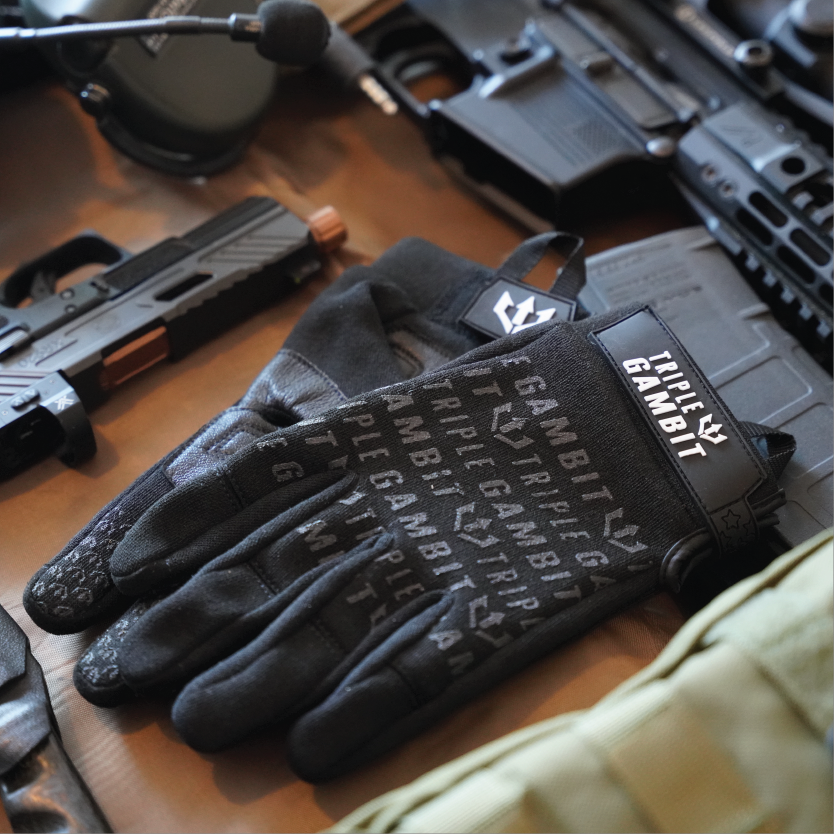
I once submitted a pair of Triple Gambit gloves to a well-respected company for evaluation. Our Kevlar-core Strike Gloves are advertised as protecting against abrasion, cut, puncture, tear, and heat, all five threats.
When I followed up, they replied, “Yes, we received them, and we were able to puncture them.”
Of course you were. They aren’t chain mail. Any knit or woven fabric can eventually be punctured. The question is how easily. (Triple Gambit has produced higher puncture-resistant gloves for specific industries upon request.)
I responded, “I’m sorry if you feel misled. I never claimed they were impenetrable. They offer resistance according to EN388 and ANSI rating protection levels.”
That’s when it hit me: most people don’t know what those ratings are or that they even exist.
If you’ve seen a shield icon or a letter-number string on a glove, you’re looking at its protection DNA. The two primary standards used globally to measure mechanical protection are:
-
EN388 (European standard)
-
ANSI/ISEA 105 (American standard)
An impenetrable glove that still offers dexterity does not exist. But measurable resistance does.
Real-World Use
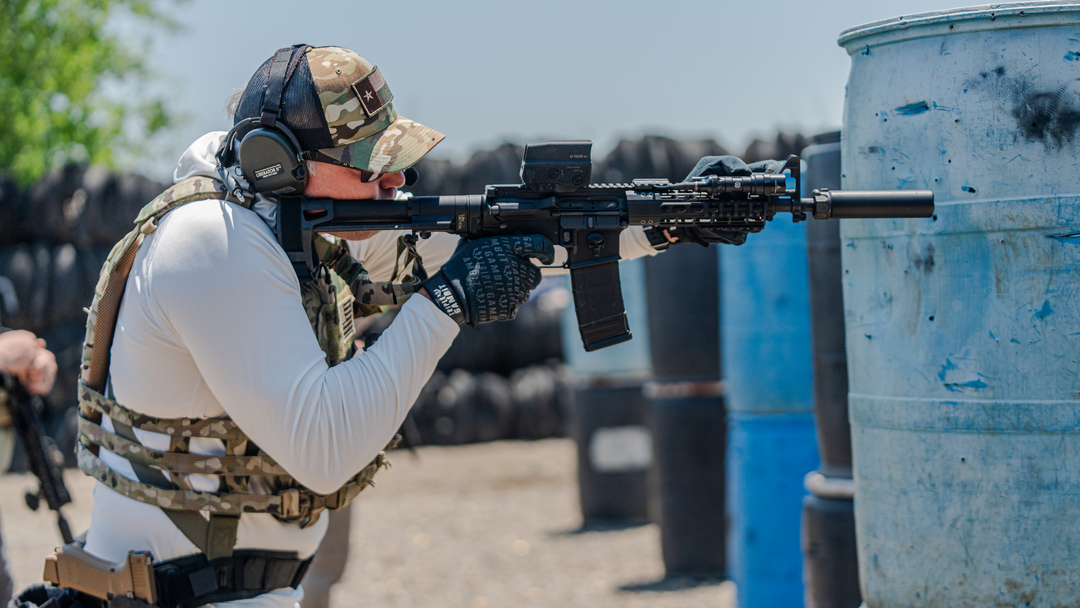
Triple Gambit gloves are currently used by:
-
Firefighters for high-rise elevator work, post-fire operations, and extrication
-
Army Rangers for fast roping and daily use
-
Law enforcement, including motorcycle police
-
Field workers at a major oil and gas company
-
Professional race team pit crews in a national manufacturer-based series
One race team shared that, unlike competitor gloves, the materials in Triple Gambit gloves protected their hands from the intense heat coming off brakes and tires during pit stops. They were no longer repeatedly burning their palms.
The Value Proposition
Triple Gambit’s Kevlar Strike Glove is currently on sale for $69.99 through a special promotion with Local Steals & Deals - Here.
Yes, the gloves cost more than what you’re used to. They also provide protection far beyond most gloves found at Home Depot, Walmart, or AutoZone. Finding protection against all five threats while maintaining dexterity and touchscreen responsiveness is rare.
You can buy one pair of Triple Gambit gloves that lasts. Or you can burn through two to three pairs of inferior gloves that provide limited protection and cost more over time.
The firefighter I mentioned earlier recently purchased his second pair of Triple Gambit gloves one year after buying his first.
“I absolutely love these,” he told me when I dropped off another pair for his teammate.
About the Author
Geoff Reeves is a former U.S. Navy SEAL and a partner at Triple Gambit. Over the course of his military career, he operated in high-risk environments where equipment failure is not an inconvenience, it is a liability. His experience in special operations shaped his uncompromising view on performance gear: it must work under stress, in heat, under load, and in real-world conditions.
After transitioning from military service, Geoff applied that same operational mindset to protective textiles and product development. His perspective is grounded in firsthand experience with what works, what fails, and what happens when it does.
This piece reflects both his academic research into the glove market and his practical experience in environments where hand protection is mission-critical.